Was it just me and my temporary(!) lapse into shallowness that pondered the Oscar winners this year as rather a handsome bunch? I mean, Daniel Day-Lewis, Tilda Swinton and Marion Cotillard, all people I wouldn't mind being seen with or talk to at dinner.
I must admit I haven't seen any movie Mr Day-Lewis was in after My Beautiful Laundrette, disproving a widely held myth you can't make it in Hollywood if you have played a faggot on screen.
I'd gladly sing Piaf song duets with Ms Cotillard drunk in the middle of the King's Cross Road (I have done this solo a couple of decades ago, I am never allowed to forget).
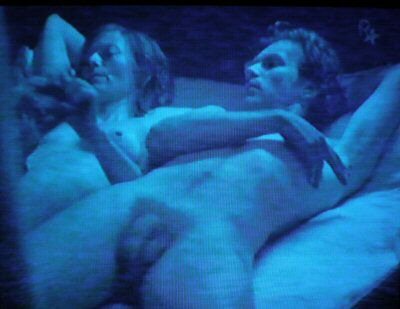
As for Tilda Swinton, her acting career, from Derek Jarman muse in some of the best films ever made in England (Caravaggio, The Last of England, War Requiem, Edward II, Orlando) to squeezing everything from Ewan McGregor, and then some, in Young Adam - NSFW still here - (if I was ever to do a MMF threesome, I'd choose Ewan and Tilda) to teasing George Clooney's Batman rubber nipples at the Oscars - you just know she would lick, suck, bite and scratch them to within an inch of his life - she just rocks. My kinda woman.
February 26, 2008


February 25, 2008
Don't do this at home
Who knew New Zealand television could be such fun and games?
From a complaint to the television watchdog, the Broadcast Standards Authority:
From a complaint to the television watchdog, the Broadcast Standards Authority:
In a segment of Balls of Steel called "Pain Men", two men devise various methods of inflicting pain on each other. In this programme, one of the men applied an electric belt sander twice to the other man's bare buttocks. The injured man then had a nail hammered through the skin between his thumb and forefinger and into a block of wood. A viewer complained that the programme set a dangerous and stupid example, and breached standards of good taste and decency, law and order, and children's interests.If it's good enough for Jesus it should be good enough for those jackasses, no?
February 22, 2008
New Zealand gay blogs
Gaynz.com has launched a few blogs by its commentators. It's not a group blog but individuals offered a space. Worth a check out, and I'm happy I'm no longer the only New Zealand blog aggregated by Queerfilter.
February 21, 2008
New AVE train route launched
 Spain's long-delayed high-speed train service has been launched between Madrid and Barcelona, cutting the travel time to 2hrs 35mins city centre to city centre. It's been a long wait! We traveled on the AVE service to Cordoba from Madrid's Atocha station 6 months before the bombings happened, and what an absolutely amazing experience that was, wooshing at 300kph across the parched highlands of central Spain. It was always odd that a high speed service has been in service for 15 years to Seville - set up in time for the World Expo there - while the train service to Barcelona was a decrepit slow train that took us all day to get there. It didn't help that the track was washed out by recent floods so the train had to go the long way round.
But now you can leave after breakfast and arrive in time for lunch in two of the most fun cities I have ever been to, Barcelona and Madrid.
February 20, 2008
The mess that is public transport in Auckland
Auckland gets frequently high grades in the livable city surveys but they are usually aimed at and compiled from high flyer expatriates on foreign currency salaries who don't need to use local amenities like public transport very much. Locals have a very different view on how Auckland is lived in and you know I have a particular beef with the local public transport system, being European and all.
There is a public transport internet forum set up by Maxx, the public transport authority, for users to vent their opinions, which, I suspect, are then studiously ignored by the powers-that-be, considering the lack of replies from higher up to any concerns voiced. But we soldier on and I like contributing there.
Here's my latest missive on horror design stories around town involving bus stops and bus lanes:
 1. The Britomart forecourt horror
Even Brian Rudman noticed "what an uninviting hell-hole the environs of that lovingly redeveloped historic building has become, now the area is wall-to-wall with noisy, fume belching buses." It's used by private cars with impunity now too. Why did we lose our pedestrian QEII Square for that?
Solution: abolish all route termini at Britomart and have through-line bus stop only. This will avoid buses being stationary for too long blocking the bus stops. Bus routes should have a spiderweb pattern with most crossing the CBD not terminating there. It'll make possible to narrow lower Queen Street in front of Britomart and increase pedestrian space.
2. Albert Street right turnoff into Customs Street.
Frequently cited to me by bus drivers as Auckland's worst intersection for buses to use. Waiting times of 10 minutes are not uncommon which is frustrating since it's in sight of your end destination at Britomart.
Solution (which I have successfully suggested to bus drivers but is considered an illegal move by bus company bosses): drive straight through to Quay Street and use the bus lane to turn into Britomart. Took 1 minute the other night.
 3. Queen Street bus lanes.
Why aren't there any? The city's busiest bus route and they have to sit with the other traffic. Easily the dumbest PT idea Auckland planners have come up with and it wasn't remedied by the Queen St upgrade. Brian Rudman's comment here.
4. Albert Street bus lanes.
They are there but they are constantly clogged up by stationary buses forcing passing buses to move into the general traffic lanes.
Solution: as in point 1., remove termini from the CBD and only have bus through routes north-south, east-west and radially. Austin in Texas has a bus system like that.
 5. The K Road bus stop configuration.
When taking a bus downtown you have to gamble at which bus stop you will get the first available bus since the Queen St buses and Pitt St buses have, inexplicably and frustratingly, different stops on K Road. And they are far enough apart to prevent making a successful run to the other one. Obviously Auckland PT planners never take the bus.
This bad configuration has been copied to the bus stops in Grey Lynn in the Gt Nth Rd/Williamson Ave area.
There is a public transport internet forum set up by Maxx, the public transport authority, for users to vent their opinions, which, I suspect, are then studiously ignored by the powers-that-be, considering the lack of replies from higher up to any concerns voiced. But we soldier on and I like contributing there.
Here's my latest missive on horror design stories around town involving bus stops and bus lanes:
 1. The Britomart forecourt horror
Even Brian Rudman noticed "what an uninviting hell-hole the environs of that lovingly redeveloped historic building has become, now the area is wall-to-wall with noisy, fume belching buses." It's used by private cars with impunity now too. Why did we lose our pedestrian QEII Square for that?
Solution: abolish all route termini at Britomart and have through-line bus stop only. This will avoid buses being stationary for too long blocking the bus stops. Bus routes should have a spiderweb pattern with most crossing the CBD not terminating there. It'll make possible to narrow lower Queen Street in front of Britomart and increase pedestrian space.
2. Albert Street right turnoff into Customs Street.

Frequently cited to me by bus drivers as Auckland's worst intersection for buses to use. Waiting times of 10 minutes are not uncommon which is frustrating since it's in sight of your end destination at Britomart.
Solution (which I have successfully suggested to bus drivers but is considered an illegal move by bus company bosses): drive straight through to Quay Street and use the bus lane to turn into Britomart. Took 1 minute the other night.
 3. Queen Street bus lanes.
Why aren't there any? The city's busiest bus route and they have to sit with the other traffic. Easily the dumbest PT idea Auckland planners have come up with and it wasn't remedied by the Queen St upgrade. Brian Rudman's comment here.
4. Albert Street bus lanes.
They are there but they are constantly clogged up by stationary buses forcing passing buses to move into the general traffic lanes.
Solution: as in point 1., remove termini from the CBD and only have bus through routes north-south, east-west and radially. Austin in Texas has a bus system like that.
 5. The K Road bus stop configuration.
When taking a bus downtown you have to gamble at which bus stop you will get the first available bus since the Queen St buses and Pitt St buses have, inexplicably and frustratingly, different stops on K Road. And they are far enough apart to prevent making a successful run to the other one. Obviously Auckland PT planners never take the bus.
This bad configuration has been copied to the bus stops in Grey Lynn in the Gt Nth Rd/Williamson Ave area.
February 19, 2008
Ultima Thule
If I had to name one of my favourite film directors, a few always come to mind, and they always include Michael Powell. He has made some of the (for me) most fascinating, thrilling, strange, intriguing and often exhilarating movies ever. He has made about 60 films in about 40 years and plenty of them would easily fit into my all time favourite top-10 films: The Red Shoes, Black Narcissus, The Life and Death of Colonel Blimp, Peeping Tom, Gone To Earth, A Canterbury Tale, 49th Parallel, One of Our Aircraft is Missing, A Matter of Life and Death, I Know Where I'm Going, Contraband, A Spy in Black - I can recommend them all as essential viewing if you are interested in English cinema of the 1940s and 1950s.
 Now the Arts Channel decided to screen one I hadn't seen before, The Edge of the World, from 1937.
A tragic and powerful tale of an isolated island off the coast of Scotland (in Roman times known as Ultima Thule, the island of Foula standing in for St Kilda) affected by diminishing local resources of fuel and manpower, causing emigration, economic, social and environmental decline. It was fascinating and moving to see the stories of local families intertwined with the larger social and economic issues driving change. A constant recurrence of a cinematic theme throughout the film was gravity, which of course pulls everything down: people and sheep falling off cliffs, the pull of the wider world out there affecting the economic base of the island, fishing, livestock and crofting. The camera angles are fascinating throughout as every scene is filmed either from a upward or downward position, emphasising the will of men to fight for what they want and believe in, or being looked on by the camera acting as mother nature overwhelming the actors by the majestic cliffs, pounding seas and constant winds. You'd wish there could have been another outcome for the people involved but in the end it seems it's not possible to live at the edge of the world: you either choose to leave or die on the island.
 Now the Arts Channel decided to screen one I hadn't seen before, The Edge of the World, from 1937.
A tragic and powerful tale of an isolated island off the coast of Scotland (in Roman times known as Ultima Thule, the island of Foula standing in for St Kilda) affected by diminishing local resources of fuel and manpower, causing emigration, economic, social and environmental decline. It was fascinating and moving to see the stories of local families intertwined with the larger social and economic issues driving change. A constant recurrence of a cinematic theme throughout the film was gravity, which of course pulls everything down: people and sheep falling off cliffs, the pull of the wider world out there affecting the economic base of the island, fishing, livestock and crofting. The camera angles are fascinating throughout as every scene is filmed either from a upward or downward position, emphasising the will of men to fight for what they want and believe in, or being looked on by the camera acting as mother nature overwhelming the actors by the majestic cliffs, pounding seas and constant winds. You'd wish there could have been another outcome for the people involved but in the end it seems it's not possible to live at the edge of the world: you either choose to leave or die on the island.
February 18, 2008
A queen never carries cash
I was walking down the road to get my lunch the other day, when I was accosted by a beggar. He was well height-weight disproportionate on the upside so he didn't particularly tug on my charity strings. I'm a terrible charity giver at best, I admit. I work for a charity so I think I already give every day of my working life, thank you. Anyway, his charity was of the personal kind and he asked me for 20c. Twenty cents! Considering he would be standing there for a very long time to make even the minimum wage he could make in an hour when working, I was wondering why ask for such a ridiculously low amount? Would you score more as in asking for less means getting more? And who carries 20c pieces these days anyway?
I had to give him the standard gay response: as a queen I never have cash on me, only plastic.
Perhaps more enterprising beggars in the future will hold out their hand-held electronic cash transfer terminals. It would certainly be an idea in a gay neighbourhood.
I had to give him the standard gay response: as a queen I never have cash on me, only plastic.
Perhaps more enterprising beggars in the future will hold out their hand-held electronic cash transfer terminals. It would certainly be an idea in a gay neighbourhood.
February 15, 2008
Local potentates on last legs?
Local government issues and governance are a bit of bore in most people's minds but I do take a more than passing interest because it affects my pocket book as a ratepayer and taxpayer, and I find power structures, democratic developments and self-governance issues (let alone my obsession with small states) interesting.
If you are not in New Zealand you probably think that Auckland is this big town with city aspirations, but in reality it's a collection of local fiefdoms (4 city councils and two district councils, towered over by a regional council, and supported by a gaggle of local community boards - including the Waiheke Island one).
The Government now has set up a Royal Commission to look at future governance structures for the whole region and residents, boards and City councils can make submissions.
One of our local board members, Nobilangelo Ceramalus, whom I voted for on the strength of his name alone (call me shallow, but call me), has launched a one-man campaign to try to convince islanders to switch local government from Auckland City to the Thames-Coromandel District Council, a peninsula about 20km east of Waiheke, and populated by an assortment of (summertime) rich listers, hippies and bushmen. He claims Waihekeans have far more in common with those folk than with the urbanites across the water to the west. The Waiheke Gulf News reports:
All fun and games at future board meetings, no doubt, but it's good to hear ideas out of leftfield because the whole governance issue is a live debate for islanders fed up with lack of control, being sucked dry by city bureaucrats and never have any say on what goes on or what should be done on the island.
It's a pity we can't have our County Council back unless we have 10,000 residents (at the last census we barely made it to 8,000) so for the time being we have to deal with Babylon-Across-The-Sea that is Auckland City Council. So I will make a submission to the Royal Commission along these lines:
- The Auckland Regional Council should become a geographical entity that will be known as Auckland around the world. The current city and district councils should be abolished and their competences transferred upwards to the new ARC (regional planning, dealing with Government and overseas) or regional entities responsible for water, sewage, infrastructure and culture - or devolved downwards to the beefed up community boards who should become responsible for local planning issues and all localised matters.
- Local government finances: rates and other property taxes should be abolished. The community boards and the ARC should be financed from a portion of the income and business taxes paid to the national Government: say, 2 percent of your gross tax should be transferred to the local board where the taxpayer resides, plus, say 1 percent of locally generated GST should be refunded to the boards and council - rather than setting up a local sales tax. This would spread the tax base of local authorities far wider and more equitably than the current system, and those percentages should be set locally with Government setting the ceiling. These new transfers would offset any current central Government subsidies for local governments and are easy to administer and transparent for payers and receivers. In essence, local government funding would be done completely from the national tax take instead of local authorities constantly pushing up local rates (which also push inflation), cut out a massive layer of bureaucracy and local authorities would be forced to live more frugally and work smarter with far more control, input and oversight of local citizens.
UPDATE: Waiheke Island now has its own site to make, collate and discuss submissions to the Royal Commission.
If you are not in New Zealand you probably think that Auckland is this big town with city aspirations, but in reality it's a collection of local fiefdoms (4 city councils and two district councils, towered over by a regional council, and supported by a gaggle of local community boards - including the Waiheke Island one).
The Government now has set up a Royal Commission to look at future governance structures for the whole region and residents, boards and City councils can make submissions.
One of our local board members, Nobilangelo Ceramalus, whom I voted for on the strength of his name alone (call me shallow, but call me), has launched a one-man campaign to try to convince islanders to switch local government from Auckland City to the Thames-Coromandel District Council, a peninsula about 20km east of Waiheke, and populated by an assortment of (summertime) rich listers, hippies and bushmen. He claims Waihekeans have far more in common with those folk than with the urbanites across the water to the west. The Waiheke Gulf News reports:
He believes that as a community we have more in common with Thames-Coromandel and would be better served by it than the current regime. “Islands are places apart, islanders are people apart,” he says.The rest of the community board members, and both the current and former Gulf Councillor have all poured cold water on the idea, criticising the timing, his lack of consultation with colleagues and the suspicion, backed up by some facts, that the Coromandel hippies need Waiheke money more than vice versa.
“They march to the beat of very different drums. Mainlanders, especially the city sort, are what they are. But when they dominate our lives the result is 'ouch!' Such as in the infamous proposed Hauraki Gulf' District Plan being rammed down our throats.
“They might, for a time, shower money on us, but we pay a high price for it. We lose our independence. And when the city is heading for a mega-city, and thinks it can be 'a world-class city', the tune is one that no one sane would call music.”
All fun and games at future board meetings, no doubt, but it's good to hear ideas out of leftfield because the whole governance issue is a live debate for islanders fed up with lack of control, being sucked dry by city bureaucrats and never have any say on what goes on or what should be done on the island.
It's a pity we can't have our County Council back unless we have 10,000 residents (at the last census we barely made it to 8,000) so for the time being we have to deal with Babylon-Across-The-Sea that is Auckland City Council. So I will make a submission to the Royal Commission along these lines:
- The Auckland Regional Council should become a geographical entity that will be known as Auckland around the world. The current city and district councils should be abolished and their competences transferred upwards to the new ARC (regional planning, dealing with Government and overseas) or regional entities responsible for water, sewage, infrastructure and culture - or devolved downwards to the beefed up community boards who should become responsible for local planning issues and all localised matters.
- Local government finances: rates and other property taxes should be abolished. The community boards and the ARC should be financed from a portion of the income and business taxes paid to the national Government: say, 2 percent of your gross tax should be transferred to the local board where the taxpayer resides, plus, say 1 percent of locally generated GST should be refunded to the boards and council - rather than setting up a local sales tax. This would spread the tax base of local authorities far wider and more equitably than the current system, and those percentages should be set locally with Government setting the ceiling. These new transfers would offset any current central Government subsidies for local governments and are easy to administer and transparent for payers and receivers. In essence, local government funding would be done completely from the national tax take instead of local authorities constantly pushing up local rates (which also push inflation), cut out a massive layer of bureaucracy and local authorities would be forced to live more frugally and work smarter with far more control, input and oversight of local citizens.
UPDATE: Waiheke Island now has its own site to make, collate and discuss submissions to the Royal Commission.
February 11, 2008
Fag single-handedly rescued capitalism
The best thing about the 1930s, and you have to search long and hard to find anything nice that happened in that dreadful decade, what with all that recession, prohibition, Nazi and Stalinist pogroms and the drums of war beating, was the Bloomsbury Group. By then the Group was on its last legs and severely affected by the nasty things that were happening in world affairs, including the Spanish Civil War.
All its members were interesting, but probably the one with still the most influence on world affairs was economist John Maynard Keynes, who overthrew economic orthodoxy at the time by encouraging Governments to stimulate their economies by deficit spending to offset falling demand.
For our purposes here, it's his sexual life that is of interest, being an active homosexual for the first quarter of the century and then settling down in married life with a Russian ballerina (I'm unsure whether that qualifies as heterosexuality). He reminds me of Marcel Proust in that respect, who took to his bed to write those interminable novels after a youth spent as a party boy.
Now, our Maynard was a bit of an obsessive with regards to note taking, figures and statistics, as a good economist behoves, and even tabulated his sex life. It's something I should have done too over the past 25 years because I find it's hard even to remember last week's adventure, let alone chance encounters decades ago - unless something really funny or memorable happened such as here (scroll down to "It's Good To Be A Guy" story).
His sexual diaries have been published and a large part was in coded form like Roger Casement's Black Diaries. Since homosexuality was very much a no-no activity after the Wilde trial, it paid to put one's conquests and thoughts down in coded form.
Now a book review speculates on the code used and is trying to decipher it. It's not a hugely difficult scheme as he codes his "activities" into three categories: C, A and W.
The book reviewer discusses possibilities with a friend (a professor of ecclesiastical history, no less, surely an authority on the matters at hand) and they conclude: A = ass; W = wank; C = either "cop" (as in "copping a feel") or cocksucking.
The reactions to the piece by readers are good fun, with plenty of other suggestions for the code (including "Adults, Wife, Children"!! and Champagne, Ale, Water)
I'm not very sure about it all either: Arse(fucking) and Cock(sucking) are standard gay male sexual choreographies, especially in quick and fleeting encounters. W is a bit of a mystery, as one correspondent said, "wanking" wasn't a term that was in use in Edwardian England. Mutual masturbation or handjobs are common activities too so it would be surprising if Maynard didn't do that too, but what W actually means is a puzzle to me.
All its members were interesting, but probably the one with still the most influence on world affairs was economist John Maynard Keynes, who overthrew economic orthodoxy at the time by encouraging Governments to stimulate their economies by deficit spending to offset falling demand.
For our purposes here, it's his sexual life that is of interest, being an active homosexual for the first quarter of the century and then settling down in married life with a Russian ballerina (I'm unsure whether that qualifies as heterosexuality). He reminds me of Marcel Proust in that respect, who took to his bed to write those interminable novels after a youth spent as a party boy.
Now, our Maynard was a bit of an obsessive with regards to note taking, figures and statistics, as a good economist behoves, and even tabulated his sex life. It's something I should have done too over the past 25 years because I find it's hard even to remember last week's adventure, let alone chance encounters decades ago - unless something really funny or memorable happened such as here (scroll down to "It's Good To Be A Guy" story).
His sexual diaries have been published and a large part was in coded form like Roger Casement's Black Diaries. Since homosexuality was very much a no-no activity after the Wilde trial, it paid to put one's conquests and thoughts down in coded form.
Now a book review speculates on the code used and is trying to decipher it. It's not a hugely difficult scheme as he codes his "activities" into three categories: C, A and W.
The book reviewer discusses possibilities with a friend (a professor of ecclesiastical history, no less, surely an authority on the matters at hand) and they conclude: A = ass; W = wank; C = either "cop" (as in "copping a feel") or cocksucking.
The reactions to the piece by readers are good fun, with plenty of other suggestions for the code (including "Adults, Wife, Children"!! and Champagne, Ale, Water)
I'm not very sure about it all either: Arse(fucking) and Cock(sucking) are standard gay male sexual choreographies, especially in quick and fleeting encounters. W is a bit of a mystery, as one correspondent said, "wanking" wasn't a term that was in use in Edwardian England. Mutual masturbation or handjobs are common activities too so it would be surprising if Maynard didn't do that too, but what W actually means is a puzzle to me.
February 06, 2008
Why boys need male role models
Overheard on the Superflyte ferry home to Waiheke, Tuesday night.
Mother and three sons aged under 10 are sitting around a table.
Son 1 (to his siblings): "Do you know what makes farts really stinky?"
His siblings (noisily, together): "Jelly babies! Ice cream! Chippies!" (and an assortment of other favourite foods and snacks)
Son 1: "Do you know, Mum?"
Mother (sternly): "Can you have this conversation with your father instead, please"
I should have turned around and suggested: "Eat your Brussels sprouts, boys!"
Mother and three sons aged under 10 are sitting around a table.
Son 1 (to his siblings): "Do you know what makes farts really stinky?"
His siblings (noisily, together): "Jelly babies! Ice cream! Chippies!" (and an assortment of other favourite foods and snacks)
Son 1: "Do you know, Mum?"
Mother (sternly): "Can you have this conversation with your father instead, please"
I should have turned around and suggested: "Eat your Brussels sprouts, boys!"
February 05, 2008
Choose your Golden Stud again
 It's that time of year again when the European soccer season is in full swing but now calls attention to player's attributes other than their ball skills. You can again vote for your favourite "Golden Stud", organised by Flemish current affairs and media periodical Humo.
You may remember 2006's delectable choice.
This year I'm going for Johan Gerets (pictured left), even though he's a bit too tall for my liking. Is it me but have footballers gone less bulk muscular?
You can see the candidates and vote here.
February 01, 2008
This made me laff
Shakespeare was never like that when I was at hight school swotting endlessly over him, but if it had been, it would have been so much more enjoyable and comprehensible.
The Skinhead Hamlet (translated from Ye Olde English by Richard Curtis Esq.) My favourite scene:
I can see a film version with Tim Roth (anno "Made in Britain") as Hamlet, Ray Winstone as Claudius, and Catherine Tate as Ophelia
The Skinhead Hamlet (translated from Ye Olde English by Richard Curtis Esq.) My favourite scene:
SCENE III
Ophelia's Bedroom.(Enter OPHELIA and LAERTES.)
LAERTES: I'm fucking off now. Watch Hamlet doesn't slip you one while I'm gone.
OPHELIA: I'll be fucked if he does.
(Exeunt.)
I can see a film version with Tim Roth (anno "Made in Britain") as Hamlet, Ray Winstone as Claudius, and Catherine Tate as Ophelia
Subscribe to:
Posts (Atom)