Showing posts with label punk. Show all posts
Showing posts with label punk. Show all posts
February 19, 2017
Alternative Ulster
In 1981, I went to Belfast on holiday. It was a dark November weekend and before boarding the ferry in Stranraer, I was questioned by non-uniform security personnel as to what my motives were to visit there out-of-season, only a month after the hunger strike in the Maze Prison was called off (Bobby Sands had died 6 months earlier). Not an auspicious time to go sightseeing, but I persevered. The atmosphere in the city was as depressing as the season. Checkpoints everywhere and body searches every time you wanted to enter the city centre. The highlight was the local anarchist club in a non-sectarian part of the city, where young people fed up with divisions could enjoy a stress-free night out away from the troubles. I remember feeling relieved to be in a welcoming place of kindness. This Guardian article brought back some great memories.


February 10, 2012
January 25, 2012
London's Burning now available as an e-book
The missing piece in the publication of my book "London's Burning: An Exploration in Punk Subculture" has now been put in place and is finally available as an e-book for all platforms (it has been already available for Kindle) so you can read it on your i-pad, PC or even cellphone.
It's available for download at Wheelers here, and it costs NZ$19.99
About "London's Burning":
Kindle version available here.
Print version in Dutch available here.
It's available for download at Wheelers here, and it costs NZ$19.99
About "London's Burning":
Thesis written in 1980 for a BA in sociology at the University of Antwerpen, Belgium, on punk subculture. It explores the sociology of punk in Britain, its history and cultural aspects such as music, imagery, fanzine publications and independent record labels. The analysis section embeds the phenomenon in the rich tapestry of British post-war youth cultures. It has a new (2011) preface and is concluded with short essays and updates. It contains original punk rock band photography and a substantial bibliography and URL resource list.Print version available here.
Kindle version available here.
Print version in Dutch available here.
April 09, 2010
Malcolm McLaren (1946-2010)
Malcolm McLaren, patron saint of rock band PR publicists and managers, Chelsea's version of the Wizard of Oz, cultural revolutionary and Situationist iconoclast, has died.
I've never met the man, but have always been amused by his tactics of getting up the noses of many in the establishment, from ITV hacks, Royal Jubilee organisers, tabloid newspaper editors and record company execs to even his former protégé, John Lydon.
He was always worth listening to, his cutting commentary on contemporary culture was always wry and biting. They could barely shut him up when he was on the radio or in nostalgic punk rock documentaries!
Of course he didn't invent punk rock or was its midwife and nanny, but you can't help but think subcultural history would have been different, much less infused with a 1968 ethos, if he hadn't been there. I'd like to remember him as the Daniel Cohn-Bendit of punk, channeling the zeitgeist of the late 1970s and nurturing it into something we can still feel vibrate today.
July 19, 2007
Rough Trade
Via BBC News:
Reading about Rough Trade always makes me quite nostalgic. I still have a pile of Rough Trade singles and fanzines (the badges seem to have gone AWOL while moving between countries and continents).
And it does prod me to finally do an English translation of my BA Sociology dissertation and put it online. Maybe when I'm retired.
At a time when CD price wars and music downloads are putting entire High Street chains at risk, independent retailers Rough Trade are opening what they say is the country's biggest music-only specialist store.I remember visiting the Rough Trade shop in Notting Hill many times during my frequent pilgrimage trips to London as a wide-eyed innocent punk rocker in the late 1970s. It was just the most magical shop where the reggae and punk rock 7 inch singles sounds wafted out of the shop as if it was Notting Hill Carnival time permanently. Not only the music was important. Also the piles and piles of fanzines and badges. Every punk rocker worth his second hand clothes and hairstyle either played in a band or published a fanzine (sometimes both) and not would be complete without lapels full of badges.
If all goes according to plan, the 5,000 sq-ft Rough Trade East on Dray Walk, just off Brick Lane, will start trading on Friday, 20 July.
The first Rough Trade shop opened in Notting Hill, west London, in 1976, and soon became known as one of the best places to find new wave music and fanzines.
A record label of the same name followed, but the two businesses went their separate ways in 1982 and are now run independently of each other.
Reading about Rough Trade always makes me quite nostalgic. I still have a pile of Rough Trade singles and fanzines (the badges seem to have gone AWOL while moving between countries and continents).
And it does prod me to finally do an English translation of my BA Sociology dissertation and put it online. Maybe when I'm retired.
October 27, 2006
Punk: Attitude
 Rialto Channel last night showed "Punk: Attitude", a documentary by Don Letts. It's a rich cornucopia of sound bites by a huge coterie of ageing punk rockers from the early 70s to the almost present, with a, to my mind, biased slant towards American bands and a less than subtle snub to the British punk rockers.
There is a complete transcript here.
It was telling that many an essential mover and shaker at the time, such as John Lydon, Malcolm McLaren and Vivienne Westwood, were all missing from the interviews. Which was kind of a shame and it was left unexplained.
But it was good to hear it confirmed, even if this is a somewhat uncharitable take on it, that UK punk rock basically was killed off by Americans on smack - the hippies' revenge?
Don Letts made the excellent "The Punk Rock Movie" (watch it online here) in 1978, which was actually a far more interesting look at the contemporary subcultural phenomenon than this 2005 "update".
But it was fun to see all those aged, balding wrinklies (pretty much what I stare at in the mirror in the morning too), but the women still looked excellent: Siouxsie Sioux, Chrissie Hynde and especially the ever wonderful Poly Styrene and Ari Up.
There are quite a few memorable quotes (and David Johansen has to be seen to be believed). My favourite came from Henry Rollins when commenting on the "hardcore punk" scene that came after as:
"Guys touching each other, sweating, flesh, pectoral muscles. Very homo-erotic. You say, fellas, stop fighting. Get a room. Get it over with"
September 18, 2006
A funny thing happened to me on the road to the Buzzcocks
It must be a sign of my mid-life crisis that I was rather looking forward to going to the Buzzcocks, a punk band I never managed to see first time around in 1977, but I always liked since that Spiral Scratch EP. Now they were playing in Auckland on a comeback tour, so that would make a good birthday present to myself.
Walking up Queen Street to the venue, I was accosted by that perennial gauntlet of Hara Krishna devotees, who, when not chanting and singing on Friday nights, try to engage you in conversation and sell you some of their books. This particular one who latched on to me wasn't half bad looking so I thought: why not play a little game with him to amuse myself.
This is how the conversation went:
I pondered about asking him out on a date but I just knew that would have been a step too far. Instead we chatted about the Hara Krishna restaurant on K Road, which incidentally I can heartily recommend if you want some healthy fast food.
I made my excuse to leave and he never even bothered to try to sell me any tracts.
The Buzzcocks, by the way, were a whole load of nostalgic singalong fun. Just like they used to be. I prayed Pete Shelley would sing "Homo Sapien", but that was as likely as laying the Monk.
Walking up Queen Street to the venue, I was accosted by that perennial gauntlet of Hara Krishna devotees, who, when not chanting and singing on Friday nights, try to engage you in conversation and sell you some of their books. This particular one who latched on to me wasn't half bad looking so I thought: why not play a little game with him to amuse myself.
This is how the conversation went:
The monk: "Hello, can I ask you a question?"
Me: "Sure"
The Monk: " What do you do in your life?"
Me: "I'm a faggot"
The Monk (visibly uncomfortable and squirming): "Professionally?"
(He obviously knew the word and what it meant, even though I hear they're upposed to have no sex lives)
Me: "No, it's my hobby."
(I swear I saw him blush, he avoided any further eye contact and didn't persist in questioning me any further on it.)
The Monk: "I see we have similar hair styles" (and took his cap off revealing his shaved skull with a little rat tail hair do)
I pondered about asking him out on a date but I just knew that would have been a step too far. Instead we chatted about the Hara Krishna restaurant on K Road, which incidentally I can heartily recommend if you want some healthy fast food.
I made my excuse to leave and he never even bothered to try to sell me any tracts.
The Buzzcocks, by the way, were a whole load of nostalgic singalong fun. Just like they used to be. I prayed Pete Shelley would sing "Homo Sapien", but that was as likely as laying the Monk.
May 02, 2006
The best song ever
April 15, 2006
My inner celebrity
 The good folks over at My Heritage have developed face recognition software that allows you to upload your own face picture and searches for any celebrity face matches to your own.
My number one match was Matthew Fox (pictured left), a outcome, I think, most flattering but I'm unsure whether he would think the same thing. I have never heard of him since I do not watch the "Lost" TV series. The only things we have in common, according to his biography, are having a pretty face and a liking for punk rock.
Mind you, it could have been worse, Rod Stewart was #5 in the face-off list. I count myself lucky.
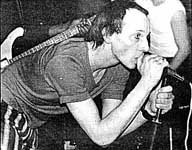
The only "celebrity" I have been compared to, and this was a long, long time ago, was Howard Devoto (pictured right).
February 17, 2006
Generation Knows Nowt
This week's episode (on NZ's C4 TV channel) of "South Park" was one of the weakest I have seen. It just didn't make any sense and wasn't even funny. The premise was that when a Woodstock-type revivalist concert is being held in the town, the resident vigilante Cartman made it his mission to kill all the hippies - even without the help of the two Vietnam vets, who, in their time, actually would have killed some given half a chance. The Woodstock generation reviving their youth are now all in their sixties and therefore would not have sons in the 8th grade, like our cartoon heroes. Instead the hippies would have been their grandparents, despite most parents in South Park looking suspiciously aged. I guess it's a case of Parker & Stone rebelling against their own parents, sort of 40 years later.
Slayer or any other death metal music didn't kill any hippies, what sort of distorted subcultural history is that?
 No, to its credit, C4 TV provided the right answer after South Park the same night: the episode of the "Classic Albums" series featured "Never Mind the Bollocks" by The Sex Pistols, hippie killers par excellence, and not so much an album as a Communist Manifesto-esque death knell to mid-1970s rock music.
Hippie drugs like heroin did kill some punks, Sid Vicious among them, but then that Spungen woman - and by extension American drug culture - was the hand behind it.
John Lydon was gloriously funny, as ever, and still sarcastically biting on Malcolm McLaren, but overall all the punks seemed to have mellowed in old age (see Julie Burchill). I even notice that when looking in the mirror at myself.
Slayer or any other death metal music didn't kill any hippies, what sort of distorted subcultural history is that?
 No, to its credit, C4 TV provided the right answer after South Park the same night: the episode of the "Classic Albums" series featured "Never Mind the Bollocks" by The Sex Pistols, hippie killers par excellence, and not so much an album as a Communist Manifesto-esque death knell to mid-1970s rock music.
Hippie drugs like heroin did kill some punks, Sid Vicious among them, but then that Spungen woman - and by extension American drug culture - was the hand behind it.
John Lydon was gloriously funny, as ever, and still sarcastically biting on Malcolm McLaren, but overall all the punks seemed to have mellowed in old age (see Julie Burchill). I even notice that when looking in the mirror at myself.
October 31, 2005
31 October

On 31 October 1980, a few mates and I organised a punk rock festival at the local youth club Djevano in a very middle class Catholic suburb. About 5 bands were scheduled to gig, but within an hour the local citizenry were alerted to and alarmed by the display and parade of about 1,000 technicolour-haired, leather-clad punks of indeterminate gender (as was the fashion then - I remember wearing a white woollen ski jumper, I mean, I wanted to stand out from the black-attired crowds!).
The cops were duly called and arrived in a few VW-combi vans. In the middle of a set, one burly law enforcement officer took to the stage to declare the proceedings over. I'm not sure what they teach these guys in cop school about handling crowds of a subculturally, shall we say, volatile nature, but the reaction from the amassed crowds, many of whom came from a large area of Western Europe for the occasion (the event had been publicised in a large number of fanzines, what with no internet and all) was rather irate.
So it all ended in tears: chairs were thrown onto the stage, the cops retreated with batons drawn and clubbed their way out, grabbing a few punters left and right and dragged them into their combi-vans, which by this stage had been reduced to window-less and smashed motorised pig-crates. The suburbs hadn't seen such a display of the arm of the law meeting the unmoveable force of speedy punks on a high. White Riot indeed.
It, of course, made the papers the next day, but at the time I was unaware of the damage caused outside the club, since I was busy clearing up the debris inside as every youth club committee member was wont to do after each night. Two days later I was summoned to the cop shop for a statement. My sociological explanations of the happenings - I had freshly graduated three months before and keen as to display my research findings (I had done, after all, my BA thesis on punk rock) - seemed to interest the duty sergeant but his supervisor, who was sitting in on our interview, just went from ginger to red to beetroot in the face the longer I went on. There was some thumb thumping, shouting and general frustration all round, but in the end they had to let me go - even after threatening to sue for damage caused to their beloved cattle trucks. Of course nothing came of that, but I guess they really had to cover their cop arse: several punks who were randomly arrested on the night were fined, even though it was completely impossible to find the rioters responsible for the damage caused.
In the end, the youth club, where I had been hanging out and working for six years, cancelled my organising committee membership, but I was not banned from the premises. The club soon after closed for good.
So that was 25 years ago last weekend. It was also, auspiciously, Radio Centraal's first broadcast night. I worked there for 6 years and my media career was born.
February 02, 2005
Death of the Single
Via JockoHomo, an interesting essay - in, of all places, the Daily Torygraph - on the demise of the single record.
It all went wrong when record companies discovered all these goodies could be used as vile marketing tools to extract coin from punters who simply had to have everything that was released by their favourite popstar. Now everything comes down from your 'puter to your i(diot)-pod in one easily charged for file. Boy, am I glad I don't have to be young these days.
"The art of the single was never really about the song. It was about the trouble you took to find it, the walk to the record shop and the effort involved in copying the lead singer's hairstyle."Searching, finding and buying a 7-inch record was always more than just for the pop song that it contained. It was a pure fetishistic pleasure contained in the package - the more outlandish the format/sleeve art the cooler! Remember all that coloured vinyl (white was always my favourite), the textured sleeves, the double hole in the record so you could play it eliptically too (the band Non on Mute Records if I recall correctly), the newspaper sleeve (Public Image Limited - no, you can't make me an offer, I'd rather sell my boyfriend instead!), the British small holes compared to the continental big ones (stop sniggering, in the record hole divisions smaller was always far cooler than big), picture sleeves which were always special in the UK while it was standard issue on the continent. I got obsessed by some small record labels, such as Rough Trade and Small Wonder Records (and even Mute), and collected as much as I could. Needless to say, 25 years later I still got them all.

It all went wrong when record companies discovered all these goodies could be used as vile marketing tools to extract coin from punters who simply had to have everything that was released by their favourite popstar. Now everything comes down from your 'puter to your i(diot)-pod in one easily charged for file. Boy, am I glad I don't have to be young these days.
December 02, 2004
Barry Buys The Beach
'Veteran punk' Barry Jenkin has bought into Waiheke Island's Beach FM.
He is currently reading breakfast news on the station and overhauling the music.
The legendary broadcaster was 'sacked' from his Sunday night slot at Radio Hauraki earlier this year but has since been making regular Friday morning appearances with Camilla Martin on Auckland's 95bFM.
(I wonder who the other seven are.)
News item via Peter
He is currently reading breakfast news on the station and overhauling the music.
This is not necessarily to my own taste as there are only about eight people on the island who like punk.Jenkin says he is as surprised as anyone that he is now a Waiheke resident, having bought a house there a month ago, and radio station owner.
If anyone had told me six months ago that I'd be living on Waiheke, I would've laughed in their face. But, it's not the wild west outpost it was in the '70s.The station is manned by about 20 volunteers and Jenkin aims to increase its revenue, seeing huge market potential over summer when Waiheke's population swells from 8000 people to 28,000.
The legendary broadcaster was 'sacked' from his Sunday night slot at Radio Hauraki earlier this year but has since been making regular Friday morning appearances with Camilla Martin on Auckland's 95bFM.
(I wonder who the other seven are.)
News item via Peter
October 27, 2004
John Peel (1939-2004)

The thing about John Peel was that he made you listen to new, unusual and idiosyncratic music and you felt better, culturally, for it afterwards. He liked to challenge your tastes and seduce you to appreciate new work, not because it was new, but because you could trust him to have listened to it with a critical ear beforehand and it had passed muster.
My first memories of listening to the John Peel show was in bed, under the covers, with my little transistor radio tuned to BBC Radio 1 in 1977. His was a late night show and medium wave radio from Britain only reached my home town on the continent after dark. So it was an ideal introduction to new music and it certainly shaped my taste as a rookie punk rocker at the time.
His soundtrack of punk rock and reggae alternating and playing off against each other I thought was marvellous and the nightclub I spent my youth in (Cinderella's Ballroom in Antwerpen) adopted this mix of then contemporary underground music. It was hilarious and rousing. Of course it changed my life and I didn't want to miss one second of it.
Thanks for the excitement, Mr Peel, and if God is a DJ, he must have learned all the tricks from you.
Addendum:
Two years ago, John Peel came to New Zealand, nay, he even stayed on Waiheke Island and he said:
This might be the loveliest place I've ever been.(Cheers, Peter, for the link)
June 08, 2004
24 Hour Party People
 Watched 24 Hour Party People last night and I thought what an unsung hero Tony Wilson, who set up Factory Records, has been in the punk/post-punk era. The kind of self-help/co-operative structure of his ventures have always been the essence of the punk ethos and, quoted in the film, he never sold out because he had never anything to sell.
I think modern music's history would have been much poorer without Factory Records. Joy Division and New Order are treasures. Love Will Tear Us Apart (FAC 23) is still the best single ever.

Ian Curtis is still very much missed. Sean Harris was brilliant in his role in the film.
Vinni Reilly (Durutti Column) was the sweetest Factory pop star of them all.
I never cared much about the Madchester scene or all that drug-fuelled raving, I never went to The Hacienda (FAC 51) but I was at this live concert.
It was a lot of fun trying to collect all Factory label products numbers, must be the Aspie in me.
Also some wonderful (even contemporary) Fac stuff here.
Factory has a blog.
Subscribe to:
Posts (Atom)