Showing posts with label television. Show all posts

February 26, 2018

LONG FORM TELEVISION

I took some time out from blogging and watched a couple of box set series on television.

SS-GB
Perfectly bilingual Germans running the UK, giving it the advantages of a European union 30 years early. I like alt-history. There was a little too much trying to be crammed into a 5-episode series. Murder, collaboration, loyalty, resistance, atomic research, House of Cards games, lust, love, betrayal, family, royalty, rivalry. And on the German side, cardboard cliche characters seen in every other British wartime series. Gripping thriller tale but ultimately quite disappointing.

WOLF HALL
What I watched instead of the rugby. "Last night I was in Spain." A true game of thrones where real heads roll. You really have to feel for the people then, afflicted by disease leading to sudden death, famine, lawlessness, poverty, and a lack of everything. And then being saddled by a class system and ruled by an intolerant religion. Nobody got a break then. Incredible acting and clever, thoughtful scripting. It's Mark Rylance's masterpiece as Cromwell, but Anton Lesser as Sir Thomas More plays him as the creepiest fundamentalist you do not want to come across. Highly recommended.

BROEN /THE BRIDGE
Swedish is definitely far easier to understand than Danish. With these Scandi-noir series it's hard to understand how the Scandinavians manage to be ranked the happiest people on earth. But I like Saga Noren, the Swedish protagonist, especially for her refreshing attitude to sex. (She's puzzled why an occasional shag wants to take her out for dinner since she always presumed that that was a prelude to and gambit for sex, not the other way round). Highly recommended, not just for the strong story and acting but the Swedish/Danish humour, which is very droll. The language games will appeal to your inner Aspie. And it was deep into season three before they realised you can draw curtains.

FORBRYDSELEN / THE KILLING
Cold, dark, windy, wet, wintry New Zealand, so what better time to watch a cold, dark, wet, windy, wintry Copenhagen doing its utmost to dispel that hygge trendiness in a superb scandi-noir Forbrydelsen series full of secrets, lies and political Machiavellianism. I just love the ribbing between the Scandinavians. Danish is pretty easy to pick up. Just mumble and they'll understand you fine. And what do I like about Denmark? The second-in-command at an army base showers with his troops in a communal bath house. When naked, the real men get sorted from the boys.

SPRINGFLODEN
Typical Scandi-noir gruesome murder case with quirky details, such as a police academy student driving a vintage convertible Mustang - in Stockholm weather! - and a sassy gay sidekick. That was a marvellously rich and surprising story. Highly recommended.

ÄNGELBY
Twin Peaks-esque Swedish mystery series, but probably a little too Catholic for Lynch fans, I think. Too much about the eternal fight between good and evil, but it has also a philosophizing police officer with a space cadet deputy, and witches and trolls (of the original Nordic kind). And pinetree woods, of course. I like a language that has the same word for 'hello' and 'bye'. Set in small town Sweden there are no traces of Ikea or H&M.

THE HANDMAID’S TALE
Time to take a break from Scandi-crime and move to the American dystopia of the Handmaid's Tale. The women get a rough deal, and the men aren't living in paradise either.
The politology. It's interesting to speculate how that dystopian society came about. I read the novel was written in 1986, way before the internet, cellphones and social media. It feels odd to have savvy strong female characters (before the change to the totalitarian regime) being totally unaware that a coup d'état by Christianists was in train.
The theocracy. Which religion actually rules in Gilead, and how did it get rid of its rivals? It seems a Protestant strand is dominant, not the Catholic Church. What happened to it, and how? What happened to the other sects, and other religions, and atheists? One executed prisoner wore a Star of David on his mask, so I presume Jewish people were part of the extermination, Nazi-style, alongside the gays and political resistance.
Gilead seems to have an excellent health service. How did they get there after Obamacare? Gynaecological services provided by men still?
It's mentioned that there are only two remaining states of the USA, with the capital (highly improbably, considering how Republican it is) in Alaska. I presume the other one is Hawaii. How did the Democratic east and west coasts get conquered? If Gilead covers all 48 continental states, I think this is a major flaw in the story, as the USA would have ceased to exist sooner and have split up along red/blue state lines.
The economy. Did the author seriously think the Gilead economy would not collapse when the whole female workforce was dismissed and had no access to bank services? (How do single females pay rent/mortgage/loans?) Where are the corporations and media? It is assumed they have had no power in stopping that economic suicide.
I like overthinking my dystopias. Dystopian visions are a challenge, like murder mysteries and crosswords. You want to unravel them, as a sport. All dystopian stories (like utopian and sci-fi ones) reflect the anxieties and hopes of the times they have been conceived in, be it More's anti-reformation dreams, Orwell's totalitarian nightmare in 1948, Star Trek in the hippie 1960s and beyond, and, in this case, Atwood's mid-1980s, before the Cold War ended, when digital technology still was in its infancy, and social control really needed brutal repressive force.
The gloryhole in the girls' toilet made me lol.
Aunt Lydia. She's a survivor too, just with a different strategy. She's straight out of "Mädchen in Uniform".  The overarching story is about hypocrisy: of the men, of the women, of the religion, of the ideology.

DEUTSCHLAND ‘83
From a hysterical dystopian breakdown in the US, now on to the good old days, when capitalists were confident and communists were too. Deutschland 83, a German twinky James Bond without the gadgets but with a terrific nostalgic early 80s soundtrack. And I never knew East German girls were that easy, skinny-dipping with their boyfriends' best friends! Absolutely enjoyable rollicking ride. I remember the Reagan-era deployment of Persching missiles in Belgium too, with all the attendant protests. Also the East German atmosphere was spot on. When travelling there in 1982, the border crossing was exactly like that - the angry-looking border officers welcome, the rifling through your backpack for forbidden literature, the enforced money exchange, the crumbling houses (very picturesque though, compared to the West German garishness). Another tale of deception and hypocrisy: everybody knew the DDR was fantasyland, everybody watched West German TV, and danced to the same pop tunes. The AIDS sub-story was poignant and a great reminder how terrifying it was.

ABER | BERGEN
Time to brush up my Norwegian with Aber | Bergen. Thankfully they got the joke about Bergen and the rain out of the way in the first 15 minutes.

LOCH NESS
Attempt at Scottish scandi-noir, complete with inventive murder motivations, but with over-bearing DCI in hock with trendy criminal psychologists, goes on and on a bit. A serial killer obsessed with body parts, bumping off gay and bi-polar characters, and you know he's had a lousy childhood and daddy issues. Gorgeous scenery, of course, but really not in the must-have-seen-this-before-you-die category. Hot trivia bit: the PC whom the camera often lingers over a little too often and too long is playing Prince Harry in a Windsor-Markle love epic.

MIDNATTSSOL / MIDNIGHT SUN
Back to Sweden/Sapmi, another gruesome serial killer series where the sun never sets. Written by the guys who brought us The Bridge, it has its customary cruelly inventive grisly murder scenes, police officers with issues, iron ore miners in underpants, cultural and political clashes between Swedes, French, and Sami. And best of all, five different languages spoken. The skies of Kiruna are magic. It never gets dark in the whole series, except when going down the mine. Recommended.

CODE 37: SEX CRIMES
Binge-watching is the current pastime, of course, so I chose a Belgian crime series set in Ghent, the city where I am from but don't have a huge link with since I had left it at age 5.'Code 37' is a fairly formulaic cop series featuring a vice squad headed by a female with a troubled past and her team of 'hardened' (but verging on gormless) males - so far so familiar. Cop show standard gruesomeness and humour ("Therrre's been a murrrrderrrr") are here replaced by rather gratuitous and superficial portrayal of the 'sex crimes' without much psychologising or illumination of motive, impact or consequences.But I learned a few things: who knew exhibitionism and voyeurism are criminal offences (even when consensual)? Some marvellous guest roles - the skinny whore john speaking with a proper Ghentian accent had me in stitches - including my old friend Frank Vercruyssen playing a porn director.

MADAME K.
What an opportunity to watch a TV series with international appeal in the Estonian language. "Madame K" is set in an upmarket Tallinn brothel on the eve of Estonia being smashed between a very hard rock (Nazi Germany) and a very hard place (Stalin's Russia).
The series could be set on a single theatrical stage but the themes, politics and personal dilemmas are vast. Being in a small country about to be occupied, razed and dismembered, your choices and options to survive are vanishing before your eyes: either be deported to the Soviet gulags or enlisted into the Wehrmacht, with fleeing to either brave Finland or neutral Sweden, both across treacherous waters, not really on offer - and recently fallen France, Britain fighting for its own survival, and an America not really interested in another European war, are well out of the picture.
All a very fascinating backdrop to this charming, leisurely-paced series where they don't hold back philosophizing about love in a brothel and geo-politics (with both intertwining when entertaining American spies and Russian soldiers alike). And it's done on a shoestring budget, with their cash spent on charming period heirlooms, appliances, cars and costumes - who knew Estonians ate waffles so often for breakfast?

AMSTERDAM UNDERCOVER
Started watching Amsterdam Undercover but had to stop mid-way episode 1 when our undercover German cop arranged a meeting with his mole at the Rijksmuseum in front of Rembrandt's Night Watch. He was the only viewer. This kind of dissing Rembrandt (and the Dutch, for the whole cast speaks German, not a word of the native tongue is heard in Wunderschön Amsterdam) cannot be allowed.
And on a wider point: whole cop series drama tropes would be wiped out if the drugs trade was legal.

FENIX
Dutch-Belgian cop series so you know the language will be vaguely cross-border Brabantian. A bit noir-ish (maybe call it 'polderdark'), even Shakespearean, slow but often a terrific ride through travellers' blood-is-not-always-thicker-than-water families, drugs manufacturing and trade, Jewish blackmail and political corruption.
Pity Teun Luijkx never took off his shirt properly in this too-short series but there were some laugh-out-loud moments in very dark humour corners involving morgues, uncircumcised corpses, and diamonds (don't ask).

REKYL / RECOIL
Up north again, this time to monochrome, gloomy, overcast Oslo, where drug-smuggling low life meets corrupt police and the exploitation of the Norwegian version of the Resource Management Act, and where everybody is cynical and devoid of any trust. It has the obligatory digs at the Swedes, but who knew Norwegian men, even after scoring a hot date, always slept with their underpants on?

STANDING TALL
South this weekend, to Rome, Anzio and Ostia, with a refreshing if terribly sad tale that is not focusing on Italian crime tropes like the Mafia and corrupt policemen - although there are some references to them - but on forces that tear a society apart more effectively than those. I'm not giving away anything more because that would be spoiling the plot, just mentioning that using the victim as a Greek chorus to the whole plot is a wonderful dramatic device.
The series is gorgeously filmed, seamlessly jumping between cinematic scopes, drone vistas, hand-held camera close-ups and grainy flashback footage that actually looks 10 years old. And with Rome as you not often see as a backdrop providing grittiness and community.
It is a feature in many a series I've watched so far that urban icons, such as trams or trains, function as an identity for where you are supposed to be immersed in as a viewer, be it Copenhagen, Oslo, Ghent, or Rome, despite none of the characters ever taking public transport. Cars, roads, and motorways are simply too ubiquitous and nondescript to provide any socio-geographical information.

NåR STøVET HAR LAGT SIG
"When the Dust Settles" is about post-traumatic stress disorder affecting multiple direct and indirect victims of a random terror attack in Copenhagen. It's an ambitious and harrowing portrayal of how a random group of people from all walks of life, from homeless single mothers to justice ministers, from plumbers to Danish Muslims, from Swedish singers to Greenlandic chefs, are trying, failing and succeeding in coming to terms with both a collective and individual experience. Copenhagen seems like a small village where everybody is connected through almost random but also meaningful meeting points, it could be just like real life but here crystallized by a single central event. Not easy to watch people falling apart and putting themselves together again. The gay Muslim seduction scene was sweet and funny but you just knew that was not to be. The putting down of the dog was callous and unbearable.

MUSTA VALO
Time to brush up my Finnish with "A Good Family", a rather implausible but still amusing tale of cops, drug dealers, wayward sons, gangster dads and cop mums in Helsinki, which looks like Auckland but mostly in the dark (it also has a gorgeous harbour with little islands to go on holiday to). The city must be small enough for everybody to know each other, especially the baddies and the cops, which makes for interesting family politics combined with corruption. After the first episode you never notice it is barely ever not dark in the streets, guns are everywhere and illegal drugs are at the root of all social evils.

THE KING
When you read this, at this very moment, you are at the current endpoint of your life choices' stream options you have made so far. No matter who, what, where, how or why your are, there you are. You may be a prison governor or guard, or even an inmate a, drug dealer, an oncologist or a chain-smoking detective, a Moroccan Milanesian or a Quran-thumping fundamentalist. This is the premise of Il Re ("The King"), a superb series set in San Michele prison, which is but a stage for a condensed version of today's Italy. Picture it: theoretical but also theatrical 'rule of law' proponents set against an assault by corrupt or corruptible state officials with an the assortment of secular and religious criminals. Who ends up in what role on which side of the fence is completely dependent on the actions and choices the individual has made in their life so far. We're all born in a prison but some of us want to get out. Focus of this story is, naturally, the title character, Bruno Testori played by Luca Zingaretti, so we're largely asked to view everything while performing his job as King or Duce running the prison, keeping his team ("Praetorian Guard" - not the only reference to Roman times) onside, bamboozling police and secret service, and investigating escape shenanigans, on top of dealing with family affairs and a coke addiction. Why anybody would choose that life path is beyond me but I demand Zingaretti is cast as Mussolini in his biopic.

August 10, 2013

An Artful Dodger's musing

First commissioned essay for New Zealand's gay newspaper express.

Do we look at the world – and art – differently because of our sexual orientation?
Imagine, if you will, wandering into an art gallery or museum, not knowing what to expect or see, perhaps enticed by a specially curated exhibition of art you are rather unfamiliar with. It’s something that may occur frequently, especially on travels when you want to see what the locals have made or collected. It happened to me last year when visiting the Auckland Art Gallery’s exhibition of work owned by the National Galleries of Scotland; the appealingly human-scaled Berlin art museums; and the renaissance treasure troves of the Low Countries.
I’m not a huge art connoisseur – I like to be surprised, appalled or seduced by each painting and sculpture that crosses my path through an exhibit, even to the point of ignoring who the artist is or what the work is called. I regard wandering through an art gallery akin to an adventure trail with no set path, signs or finish. A complete open-mindedness when approaching a piece of work has, in my experience, always stood me in good stead and allowed me to be able to enjoy the art – even the disappointments. Contemplating a painting that draws you in, screws your brain and leaves you pleasantly exhausted is almost as good as having mind-blowing sex.
I would like to think that the way art speaks to people is somehow related to their sexuality and sensibility. I love hearing a lesbian’s assessment of a Tom of Finland drawing or a straight man’s eulogy of the female nude in Western painting, then trying to relate those criticisms to my own. On a related but different level, I would hypothesize that many collections around the globe might have contained very different pieces if their investors/collectors had not been gay men or lesbians. And does this mean that my distinct lack of enjoyment of the aforementioned Scottish exhibition, despite its critical acclaim in the local media, is due to my gay sensibility second-rating many of the works? One often knows more about the artist’s inclinations than the critic’s.
For those lucky enough not to have studied for a fine arts degree, like me, there are some excellent art historians and critics around who have produced sterling guiding work for television. Sister Wendy’s roaringly funny and touching reflections on art, particularly religious art, and Kenneth Clark’s Civilisation have both given me the confidence to look at art with all my senses and judging faculties, and being unafraid of going against the received wisdom of the art canon.
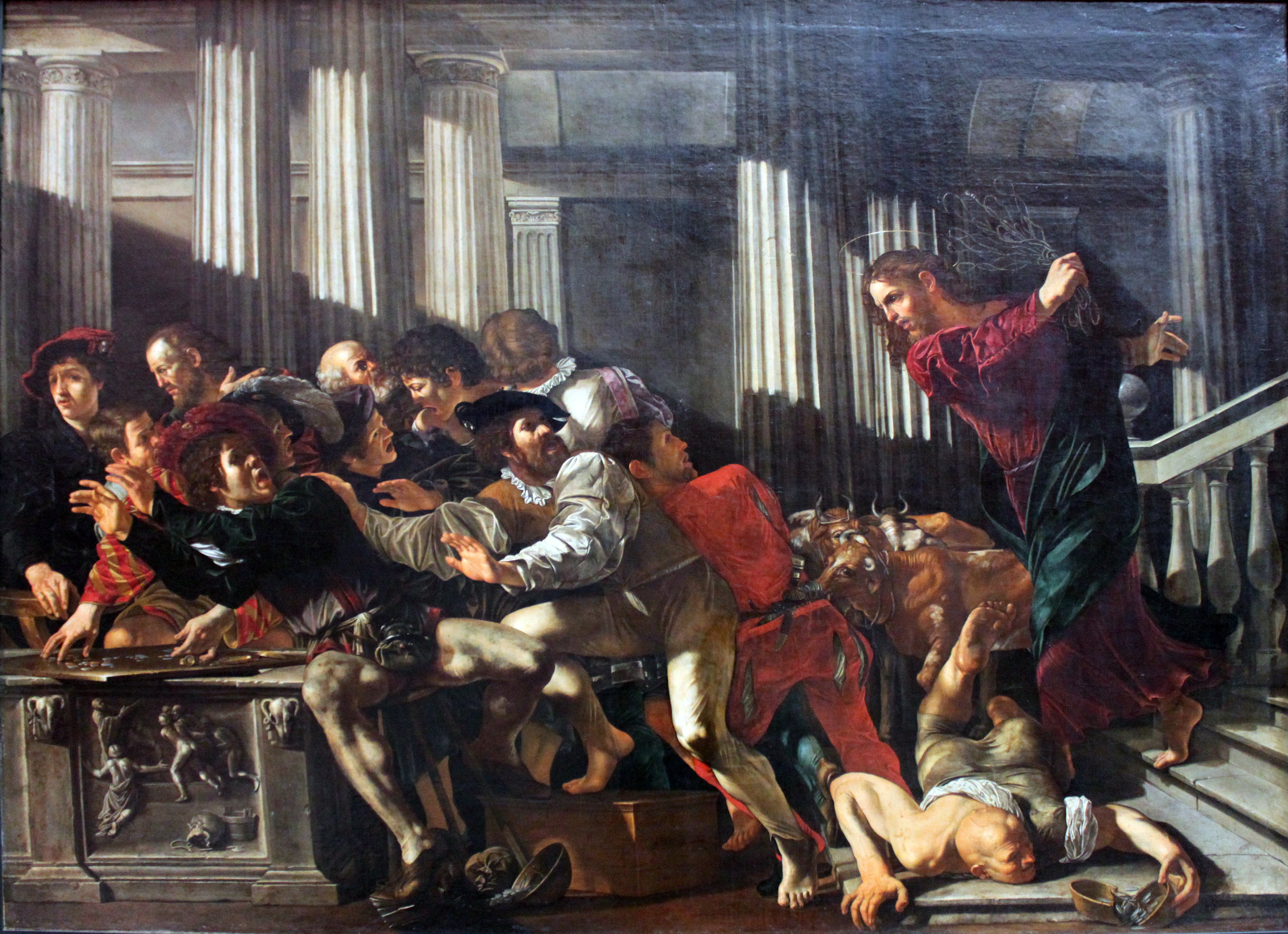
On BBC World News, Andrew Graham-Dixon is a leading light when it comes to letting you see art in an unexpected sociological and national historical setting. He did a series on Russian and German art and his take on art in the Low Countries is on the Arts Channel. His previous work included a riveting piece on Caravaggio’s relationship between the artist’s biography and his art, which was especially appealing to a gay guy like me after Derek Jarman’s earlier magisterial and idiosyncratic treatment of Caravaggio’s life. And nothing, of course, beats standing in front of “Christ Expulses the Money Changers Out of the Temple” or “Triumphant Eros” at the Gemäldegalerie in Berlin.

Simon Schama has produced an intensely personal take on artists as varied as Rembrandt, David and Rothko in his Power of Art series on BBC Knowledge, which smacks you round the head with its erudition and often far-fetched theorising. He nevertheless remains enjoyable because the show allows you to talk back afterwards, if you’re keen enough to delve into the subject’s art yourself.
None of those television personalities, as far as I know, are gay. So I am again intrigued whether critics of a different sexual orientation would approach Bernini, Friedrich or Hirst differently.
Re-interpreting imagery, storylines, characters and quotations is what we are really good at. Whole pre-gay liberation movements have devoted their waking hours to appropriating actresses, films and operas, resulting in whole swags of cultural icons and artefacts now being recognised as ‘gay culture’ which every aspiring queen needs to master. The beauty is that this gay subcultural conquest is on-going, even though it is becoming less easy to find material since show business and other visual arts are now actively niche-marketed to us instead of invented by us.
We just like to dance to our own tune and dream the world as we want.

September 26, 2012

An Englander in Europe

An amusing TV series sees British comedian and wit Paul Merton travel around Europe in a series reminiscent of Eurotrash, lacking that series' knowing camp but with a general ignorance of things continental as is wont of Englanders who haven't travelled much.
Any prejudices of Germany as humourless, boring or fascistic were instantly removed the moment he arrived and by everybody he met there, and with good reason. Even I had to chuckle at the "Appelsaft" shouting anti-fascist demonstrators, and next time I'm in Germany I want to  do some "nacktivist" stuff too (nudist activities such as bowling and hiking - the only stuff I got to do recently was just the sex) or just stay in a prison converted into a hotel, with guard/staff as optional extra. The beer tub treatment for your skin (and a kip in the hay after) had to be seen to be believed and wouldn't fail being appealing to any beer-swilling Brits.
Not sure whether the rest of the series will live up to the marvellous fun in Germany, but I'm willing to be surprised too.

January 06, 2012

May 30, 2011

Louis Theroux Weird Weekends

BBC Knowledge is re-running a 1998 series by Louis Theroux in which he goes Gonzo-style into 'weird' subcultures. It makes a worthwhile change from the standard fly on the wall stuff. He's filming openly, to the point of even participating in the main activity reported on. There is no subterfuge or undercover try-to-catch-them-out but he leaves it, thankfully, up to the viewer to ponder the lifestyles of the strange and unknown
The episode that caught my attention was about the Los Angeles porn industry, then (1998) in the midst of an HIV scare (several performers had been recently diagnosed and caused shock waves through the industry with many reconsidering their careers) but not yet fully affected by the online free-for-all (performing and downloading) which has made the current business model basically untenable. But what we learn from the film is that it's an excellent short term money spinner for performers despite the risks to your physical and mental health. The glaring difference with the real world - speaking in terms of male and female pay rates in doing the same job - is that men earn far less than women and actually have a much harder (to excuse a pun) job than their female co-stars: keeping wood and delivering the money shot after a long day filming on a set with many staff around and when many of your co-performers may not be of your sexual taste is admirable. The attrition rate mentioned by the producers and casting agents, who, of course, make the most money out of your talent, is not surprising.
A few vignettes stuck in my mind: the English girl who preferred to work in American porn instead of Europe because "she doesn't get bruised or injured here"; the male former Airforce performer who looked genuinely puzzled when asked what he was going to do if porn didn't work out in the future (there is never a plan B in America, it seems); the sheer stress on all the males to perform - and you got to feel sorry for those gay-for-pay straight dudes who have their minds and genitals messed with.

May 16, 2011

What would Roman or Greek TV have looked like?

Trying to portray ancient, non-Christian cultures on screen in this far more tight-laced (despite all the rantings about too much sex and violence) cultural environment of contemporary television is fraught with difficulties for producers aiming for accuracy rather than pandering towards modern prejudices. Let's look at two offerings currently on a TV screen near you.

Spartacus: Gods of the Arena is the prequel to Spartacus: Blood and Sand, which screened last year. Much has been made - nay, it is even the crux of its marketing appeal - about the amount of blood-soaked violence and sweaty sex featured. And it is true that the portrayal of blood, in all that slow motioned slicing, stabbing, carving and flaying of the unfortunate humans on the receiving end, is high on the fetish scale. To defend yourself or kill your opponent in Roman times you needed to be prepared to get your hands bloody (and it teaches all those modern gun-nuts how real men used to do it without access to 2nd Amendment firearms), have enough strength, moral inclination and willpower to drive that steel into another human body, and be ready to deal with the splattering and gurgling consequences. And that's what we viewers have to deal with too: the sight and sounds of an arc of blood flying slo-mo through the air, a standard image sequence in each episode, has all the qualities of a moneyshot. And that is my main criticism with Spartacus: I wish there be as much attention paid to visual and aural detail in the sex scenes as there is in the gore. The sex is portrayed as coy: genitals are barely glimpsed (certainly no hard-ons), the writhing only worthy of a standard soft porn movie, the throes of passion look choreographed and determined by lighting directors and makeup artists - you need to almost put it on fast forward to get some earthy grunt and sweaty action.
In all, if you're going to make a bodily fluid film can we please have less blood and more semen?

Even in a non-fictional portrayal of classical culture, like the documentary series The Ancient Greek Olympics, currently on The History Channel, the narrator had to 'apologise' the production was unable to actually show historical reality (i.e. male athletes always exercised and competed nude) due to our 'Christian' (un-modern) sensibilities about the naked body on screen. Even in our so-called secular times it is still not permitted to show the ancient (and irrepressible) glorification of the nude male body on television and it proves that we are still living in a form of dark ages and have a long road ahead toward enlightenment. It was no surprise the church fathers banned the Olympics - still, it took them four centuries into the Christian era before they succeeded - but we will never be a true post-religious society unless the ancient Olympics can be restored, and, in the meantime, portrayed accurately on TV.

April 16, 2011

George Gently (and subtly)

UKTV has started screening a terrific cop series here in New Zealand. Inspector George Gently has the appearance of a run-of-the-mill detective series but its setting in 1960s rural England makes it interesting. The death penalty was still in force and enforced, which makes a conviction for murder a risky affair for your own life. The lack of modern gadgetry in crime solving such as DNA testing, cellphones and computer databases are still decades away. It makes for so much better drama when it is all about the relationships of the protagonists, the criminal motives and the psychological games played between the 'cops and robbers'. Hence the popularity of series like Cracker, Inspector Morse and (even) Waking The Dead.
Male homosexuality was verboten at the time but that didn't make it invisible or unknown and it featured as a crucial subplot in the first episode. The hotel lobby scene, gay "Brief Encounter"-esque in feel if not linked to the reality of the scene, turned the frisson between the closet and the contemporary illegality into a marvellously subtle criticism of the law's nonsense. The waiter, in the briefest of appearances, gave a brilliant performance on how to skirt the sensitivity of the subject professionally. And Martin Shaw's face was priceless at the hapless Bacchus. "I'm not like that, I'm married!" still echoes down the ages as the truth that dares not speak out.
What I also liked (in episode zero at least) was that despite the psychotic revenge binge the Philip Davis character embarked on, the actual violence or gore was barely shown and the horror was implied off-screen, which makes it a very classical Greek-style drama.

April 09, 2011

The not-so-Almighty Johnsons

I have been sitting through a locally (New Zealand) made TV series, called "The Almighty Johnsons", for a few weeks now and I wish I could get that time of my life back. I can't remember laughing with any of the scenes, caring for any of the characters or wondering and bothering what will happen next. It has more excruciable acting and mangled vowels than a Viking battle. The story line is so thin it barely progresses episode by episode, no multiple layer stories or surprising grand arcs. Not even a memorable quote or joke - just that cringeing one the writers must have liked so much they put it in twice (comparing the rune alphabet with dancing trees).
I can but dream how the series would have been completely hilarious had, say, Rick Mayall and Ade Edmondson in their "Bottom" incarnations, found themselves as Norse gods who lost their mojo unless they can score with a saucy lady down the pub (after lock-in).

December 30, 2008

The TV meme

Despite the Summery weather, here's the meme for those who prefer to stay inside (via Bjørn's blog).

01. Name a TV show series in which you have seen every episode at least twice: Fawlty Towers; Shameless; Absolutely Fabulous; Blackadder; Creature Comforts
02. Name a show you can't miss: The Royle Family; The Catherine Tate Show
03. Name an actor that would make you more inclined to watch a show: Sue Johnston; Ray Winstone
04. Name an actor who would make you less likely to watch a show: most American actors
05. Name a show you can, and do, quote from: Blackadder
06. Name a show you like that no one else enjoys: The Kingdom
07. Name a TV show which you've been known to sing the theme song: The Sweeney (opening, closing)
08. Name a show you would recommend everyone to watch: Shameless
09. Name a TV series you own: Brideshead Revisited; Twin Peaks; The Royle Family
10. Name an actor who launched his/her entertainment career in another
medium, but has surprised you with his/her acting choices in television: Vinnie Jones
11. What is your favorite episode of your favorite series? The Beer episode of Blackadder II
12. Name a show you keep meaning to watch, but you just haven't gotten around to yet: The Sopranos
13. Ever quit watching a show because it was so bad? Desperate Housewives
14. Name a show that's made you cry multiple times: none
15. What do you eat when you watch TV? Potato chips? Chocolate? Wine, chocolate
16. How often do you watch TV? It's my job
17. What's the last TV show you watched? The Queen of Sheba episode of The Royle Family
18. What's your favourite/preferred genre of TV? Comedy; crime
19. What was the first TV show you were obsessed with? UFO, especially with Michael Billington and Ed Bishop
20. What TV show do you wish you never watched? Sharpe
21. What's the weirdest show you enjoyed? Twin Peaks
22. What TV show scared you the most? UFO, see question 19 (the scene in which Billington drowns in the alien's liquid inside his space suit still sometimes gives me nightmares. But SID's plummy voice was soothing)
23. What is the funniest TV show you have ever watched? see question 1

August 06, 2008

Waking the Dead skinheads

What happens when youth cultures grow old? That was the interesting context of a rather gruesome episode of "Waking the Dead" (episode summary), the crime series which specialises in digging out old murder cases (but not necessarily cold ones).
Police crime series seem to always try to incorporate contemporary concerns subtly and/or brutally into their story lines: Jane Tennyson in "Prime Suspect" was forever chasing 1990s paedophiles and John Thaw as "Morse" always got the 1980s Satanic and druggie rave party murders. But this episode of "Waking the Dead" had a massive overload of hot buttons du jour: far right British racist skinheads turn politicians, Muslim intolerance and its threats, wife abuse, Aids (and how you get it), Nigerian homophobia, snuff movies, cross-cultural love and its pitfalls. It all made watching it rather heavy going and resulted in some inelegant, anachronistic and convoluted story lines.
But the subcultural references were enjoyable in a perverse kind of way: the superannuated skinheads looked like a bunch of gay men who refuse to grow a combover, and their SM antics wouldn't look out of place in the more adventurous underground nightspots.
And I did marvel at how we should believe that a 17 year old video recording which was hidden in a not too sheltered space all that time could produce such clear vivid pictures. Analogue tape never looked or could be made to look that good, not even my Betamax.
I wasn't sure whether you can actually easily get HIV from a tattooing instrument where the tattooist mixed the ink with his own blood. I thought HIV was a rather fragile thing that doesn't survive well outside its warm blood medium. But perhaps an epidemiologist can work that one out for me?

July 23, 2008

Gay Snickers, or just boring straight nuts?

There has been some kerfuffle about "homophobic" advertising on American television by snack bar company Snickers. One advert, played during that man-love fest, the Superbowl, featured two guys nibbling on each end of a bar then meeting in the middle (Lady & The Tramp spaghetti eating style, if you remember that) for a snog and inevitable ending in an assertion of heterosexual chest-hair ripping masculinity:


Then there is the recent one featuring Mr T shooting up a mincingly speed-walking athlete, encouraging him to "get some nuts":


UPDATE: The Mr T advert has now been withdrawn.

All a far cry from the Snickers ads down under, which I have always liked because of their quite homo-erotic scenarios involving those surfer boys. Here's one of the Australian versions:


How come a company like Snickers approves such diametrically opposed imagery in their advertising in different countries?

July 09, 2008

Porn and rugby, but not quite sporno

We have been vindicated again in our never ending fascination with sex and sport when even mainstream channels have put both together in a weekend afternoon schedule. Prime TV screened a few minutes of porn during its "grassroots" rugby show, as technicians got the wiring wrongly linked up for Sky's pay-per-porn channel Spice:excess.
But instead of going all ga-ga over it, what a great opportunity for fathers and sons, who were already bonding over a game of "grassroots" rugby that afternoon, to make it easy to have a chat about the other facts of male life, amply illustrated with visuals courtesy of your pay TV subscription.
Perhaps Sky TV should go off on a new marketing campaign promoting its sex and sports channels in one easy male bonding package.

And isn't it interesting that all the "male" channels on Sky (Sports, Movies, Rugby, Porn) are only available when paying through the nose on top of your basic subscription, while Sky has been hastily adding channels aimed at females to its basic package (e.g. Vibe, Fashion TV). It's hard to be a guy!

June 25, 2008

The freedom of speech and the freedom to propagate

Aljazeera English's TV programme Listening Post is always worth a watch. It handles television news and current affairs as media issues but in an amusing non-specialist way.
This morning's broadcast was exceptionally about Aljazeera itself, and its lack of coverage and reach in the United States: only two cities, Toledo and Burlington, have the channel on their city cable systems. If you want to watch it in America you either need your own satellite dish or watch it online. Now Burlington is in the middle of a public spat over whether to let Aljazeera continue broadcasting on their cable, with high-spirited public meetings arguing for and against a ban. All very much fun and games, especially the ban proponents' argument that it is anti-Israel and anti-America, to which the ban opponents reply that Aljazeera is one of the most watched stations in Israel.

You can watch the show here on YouTube.

By sheer coincidence, that other paragon of American journalistic quality, The News Hour with Jim Lehrer, ran an item last night about the American Government-funded Arabic channel Al Hurra and its lack of impact it is having on Middle Eastern public opinion about America, despite its massive funding.

Links: Transcript and video.

It's fairly obvious that the men at IBB, who run all the American "propaganda" channels (not Fox News TV!) like TV Marti, VOA or Al Hurra, are still fighting the media war as if it was a cold one. Radio Liberty may have contributed to the fall of the evil Soviet empire, but I can't see Al Hurra do quite the same thing to Iran or (Allah forbid because they're our mates) Saudi Arabia. Perhaps they should subcontract Al Hurra wholesale to Fox News to give those Ayrabs a taste of America.

Personally, I'm quite proud to have been involved in bringing VOA and Aljazeera to New Zealand without busybodies interfering - although they have tried!

May 15, 2008

Sex BC (rewrite)

The History Channel has finally broadcast the "Sex BC" mini-series in prime time. Last year, on its first outing, it was buried in the wee hours, probably due to its subject matter, but there's really nothing that would frighten the horses.
It has only three parts dealing respectively with prehistory, Egypt and the Classical period. It's actually quite informative and well presented but throughout you feel this frisson when archaeologists start to speculate - due to the lack of any written material - what all the stuff they have found (large-breasted figurines, wooden dildoes by the box full, graphical and hieroglyphic pornography in scrolls and on the walls everywhere, threesome burials with ritualistic mutilations etc) actually means to an audience steeped in 2000 years of Christianity or 1300 years of Islamism.
A delicious irony is that Egyptology was a favourite pastime of some Victorians who couldn't get all that salacious material fast enough to the vaults of the British Museum to be locked away forever, if it was up to them. And what a contrast too between the sex-everywhere ancient Egyptians and the contemporary repressed Islamic society that inhabits the Nile Delta today. Monotheism has a lot to answer for, and you can't but think that a lot of world trouble would be helped by relieving all that sexual frustration by and repressive submission to religious regimes.
The final installment on the subject of the Classics, from which we libertines and secularists can still learn a great deal sexually, was a very satisfying one because the sex in that historical period was treated as an evolving subject, not as static given. It thankfully covered a much broader range of subjects than the cliche Greek pederasty so beloved by Victorian and modern outrage, but there was some tut-tutting in the programme when it described the symposium culture, where citizens brought their sons who had reached puberty for introduction into civil society - a "coming out" truer to its concept than the modern day versions.
But luckily it also told me a lot I didn't learn in my high school classical education: how did the Greek city states manage such effective fighting forces in their athletically-trained, sexually-competitive youths? How did they breed such good soldiers? (I think a marriage ban before the age of 30 for males would still make sense today) How much was all this vaunted libertine civilisation only an upper-class, male citizen preserve and why does it still fascinate or morally outrage some of us?
A slave economy helped enormously, of course, with women and children as chattels too. The Greek city state and its culture and social organisation was obviously a product of its economic basis. The loyal (sexual) bond between its (citizen) men was a powerful social glue where being a coward on the battlefield in view of your lover was a huge dishonour. This alien (for our modern armies) concept is completely absent in practically every Hollywood sandals and swords movies, the truly atrocious "300" a good example (including the depiction of Spartans fighting in leather jockstraps). Contrast also with Alexander, whose conquering feats a few centuries alter had more to do with a Freudian proving himself to his father - a type of psychological behaviour predating monotheistic submission to the God instead of fighting for your Polis.

Channel 4, which commissioned the series, has a great background article on the issue of sex in history.

May 13, 2008

9 Bonks added extras

You may remember last year's screening of 9 Songs, which I blogged about. Now the NZ Broadcast Standards Authority has upheld a viewer complaint against the film - for not having sufficient warnings about its content beforehand. Not because it had bad sex, bad tits or bad music in it, mind you!
From a professional point of view, I was intrigued to read in the BSA decision that the defendant was TelstraClear, the cable operator, and not the Rialto Channel, the actual broadcaster. Does this mean broadcast platforms will now be liable for content rather than the actual television station? I'm finding out from the BSA.

March 26, 2008

Easter decadence

The longest weekend in the New Zealand calendar and what a scorcher it was. We spent most late afternoons on the beach admiring the many foreign pale backpackers gingerly taking all their clothes off, goofing around taking pictures of each other to prove to the folks back home it's still summer here. On top of that, of course, marvellous wining and dining and partying around the island. Waiheke is rapidly becoming the Ibiza of the South Pacific!
And in between, sleepily lying around, trying to keep an eye on a very bloody season on UKTV, which was screening all its detective fiction series back to back for the duration. The Brits do murder so well, in a far more entertaining way than series like CSI. But only keeping half an eye on the plot trying to figure out whodunit, it enabled my brain to explore other aspects of the televisual feast.
And the big thing that struck me was that in practically every series at least one of the actors has been or is in a comedy series too. Let's take an overview:

Whodunit series -- Actor -- Comedy series
Waking the Dead -- Sue Johnston -- The Royle Family
A Touch of Frost -- David Jason -- Only Fools And Horses
Foyle's War -- Gerard Kearns -- Shameless
Cracker -- Robbie Coltraine -- Blackadder
Midsomer Murders -- John Nettles -- The Liver Birds
Silent Witness -- Amanda Burton -- Boon
Inspector Morse -- Kevin Whately -- Auf Wiedersehen, Pet
Judge John Deed -- Martin Shaw -- Doctor in the House
Jericho -- Robert Lindsay -- My Family
Jonathan Creek -- Caroline Quentin -- Men Behaving Badly
Dalziel and Pascoe -- Warren Clarke -- Blackadder

All that blood and gore was made so much more watchable by treating it as comedy

March 09, 2008

Barebacking on the BBC

One of the things I regretted most leaving behind when emigrating to New Zealand from the UK was BBC Two's Newsnight. This is simply the most terrific news programme and even alone worth the broadcasting licence fee. Hosted by Kirsty Wark and Jeremy "The Pax" Paxman (picture left) and a few others, all well-loved, well-respected, and above all, a joy to watch them make politicians and other interviewees squirm, it made some brief appearances on BBC World Service Television when it first started but was dropped when the station was re-branded as a 24/7 news channel.
But now it's back, in a weekly omnibus edition for world audiences. It's one news programme you should not miss.
Last night, a very topical issue was handled quite sensibly: gay bareback porn and its popularity, its money spinning niche market status and its lethality for performers. Watch the clip here.
I have blogged against bareback videos before. But the final interview on the clip with the infected porn performer who didn't give a shit because "got it already anyway" showed again what dumbasses some of those young queens are, and they shouldn't be too surprised if they get beaten up or worse by other dumbass bigots.

February 25, 2008

Don't do this at home

Who knew New Zealand television could be such fun and games?
From a complaint to the television watchdog, the Broadcast Standards Authority:
In a segment of Balls of Steel called "Pain Men", two men devise various methods of inflicting pain on each other. In this programme, one of the men applied an electric belt sander twice to the other man's bare buttocks. The injured man then had a nail hammered through the skin between his thumb and forefinger and into a block of wood. A viewer complained that the programme set a dangerous and stupid example, and breached standards of good taste and decency, law and order, and children's interests.
If it's good enough for Jesus it should be good enough for those jackasses, no?

December 05, 2007

I haven't slept yet this week

You must think me crazy for wanting to watch television after a hard day's work in television land, but I do, so I maybe am. But who can resist such a wonderful smorgasbord of British comedy every night this month on NZ's version of UK TV?
Complete reruns of Fawlty Towers, Absolutely Fabulous, Little Britain, Two Pints of Lager And A Packet of Crisps, Shameless (all every night), plus a gaggle of shows I hadn't seen before and will look forward to. It just amuses me greatly.
A surprising gem so far has been My Life in Film, and based on watching just one episode - a delicious remake of Hitchcock's Rear Window, minus the gorgeous Grace Kelly, but with a gormless male flatmate of the voyeur - I'm looking forward to seeing the rest of the series.
Fawlty Towers just looks as fun as ever, it never bores me, and I trust it never bores you either.
No gay household is complete with its one-liners from AbFab being banded about, even 15 years after the first series was made. My favourite one is:
Edina [talking about Germaine Greer]: "Mr Gravity has been very unkind to that woman."
I'm a bit unsure about Little Britain. Not all sketches, recurring threads and characters are a triumph, especially the PM's gay assistant Sebastian, the granny humper and the Fat Fighting woman are very unfunny. But narrator Tom Baker is just brilliant and by far my favourite bit in the series.
It's so good to see Frank and his brood again in Shameless, and I do want to stay up for that until way past my bedtime. I love it that the camera always wants to get Lip's delectable naked pasty-white arse in the frame.
I shall just have to put match sticks between my eyelids lest I miss one nanosecond of this televisual feast.

November 06, 2007

My favourite Norwegian TV show

Not that I can watch Norwegian TV here at the other side of the world, but I'm sure it would be if I could, judging from the rave reviews of Norway's TV2's "The Manshow".
The show has been testing a variety of sports whether they would be suitable to be played in the nude. Now that's a sports programme we could wholeheartedly support. Why doesn't New Zealand's sports channels do something like that because we already play rugby in the buff.